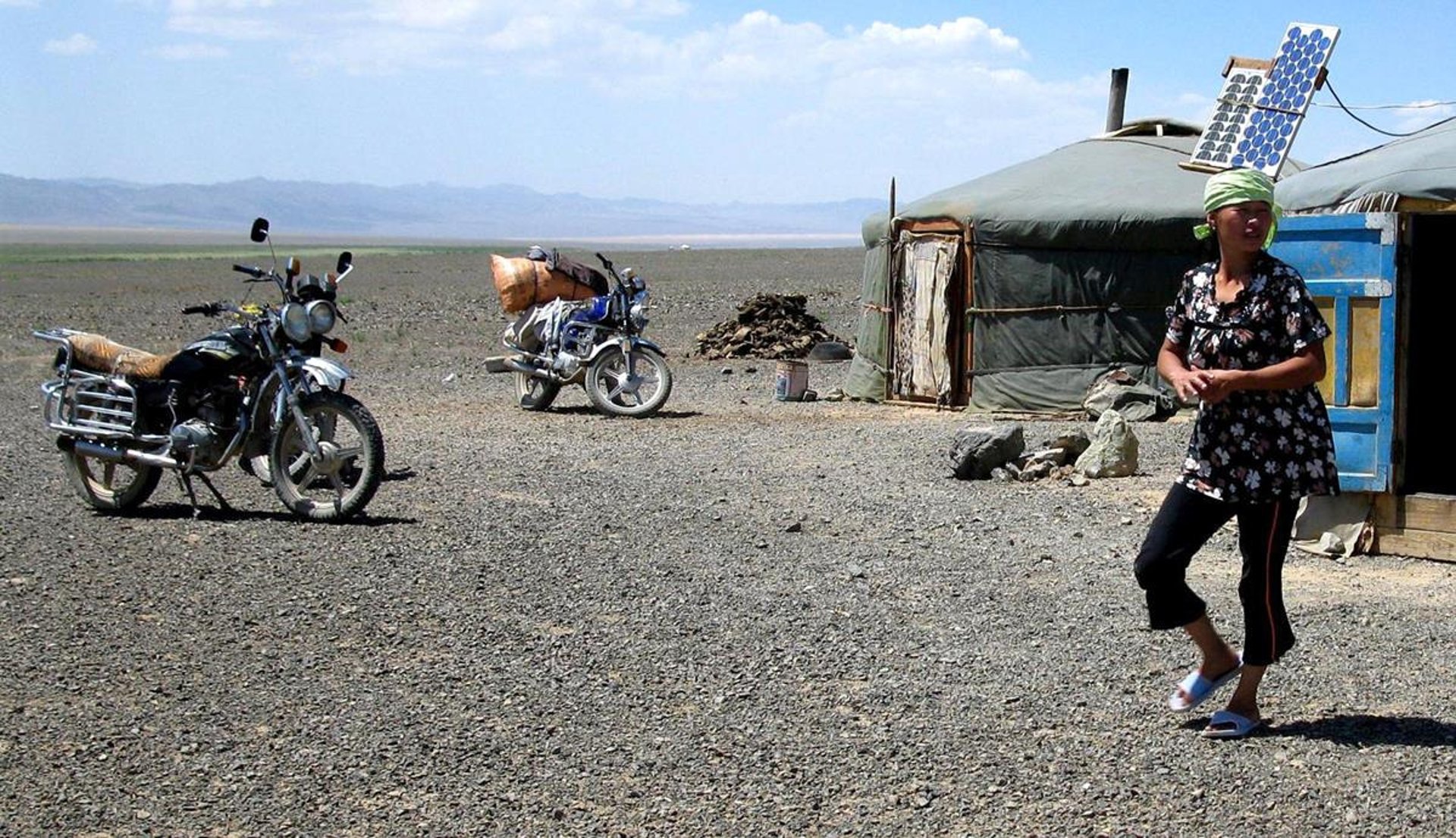
For millennia and until a few centuries ago, nomadic peoples were scattered across much of our planet. Vast areas unsuitable for permanent settlement encouraged their emergence. Most of Australia was inhabited by wandering foragers. In Asia, mobile herders dominated large areas of present-day China, Central Asia and Siberia, as well as the whole of Mongolia for centuries, while hunter-gatherer communities have been present in almost all of Australasia, the Amazon, and a significant proportion of the present-day territories of Canada and the United States. In Africa, the Sahara and northern Sahel, and many regions in the east and south, as well as the Congo Basin, have witnessed the passage of nomadic groups that still inhabit these areas. Transhumance has developed in the Mediterranean basin and the Carpathians since ancient times, with the Saami of northern Scandinavia being the best-known European nation with a nomadic tradition. In the Middle East, the desert has been the ancestral homeland of the Bedouins and its mountainous areas the residence during the warm season of different tribes, from Turkey to Iran, where goats and sheep were probably first domesticated. Other nomadic communities are found further east, in Afghanistan, Pakistan and India, both pastoralists and itinerants. Finally, the tropical forests and waters of Southeast Asia have provided and still provide shelter for mobile groups of fisherfolk and hunter-gatherers (From the essay "Beyond Pastoralism", by S. Carralero)
Mobility is a strategy employed by the animals that inhabit the Earth to survive in their respective ecosystems, in accordance with available resources and the changing seasons. It has also been a strategy for human beings ever since we diverged from primates as a distinct species some 6 million years ago. It is only in the last 15,000 years that we have ceased to move in order to adapt to nature and have settled down thanks to agriculture, causing nature to adapt to us—that is, by over-exploiting it and thereby transforming its functions. In this sedentary phase, which accounts for barely 0.25% of human life on Earth, the planet has changed its appearance drastically; as if it had undergone successive plastic surgery operations, our world would be almost unrecognisable to those prehistoric humans, who would undoubtedly be seized by terror at finding themselves surrounded by roads, cars, aeroplanes and buildings
Cities are not self-sustaining systems of life, unlike natural ecosystems. All the resources found in cities ultimately derive from nature: wood, metals, gases, minerals and water; consequently, increased urban expansion leads to greater exploitation of natural resources. It also results in greater environmental pollution. The current climate crisis is a sign that the sophisticated modernity we boast of is not what it seems, but merely a mirage of progress. And yet we still fail to see, or refuse to look, as human egocentrism is so great that even though we know the root causes of the ills afflicting our planet, we continue to rush headlong in the same direction. And this general attitude does not seem likely to change any time soon, given the submissive stance everyone adopts, mesmerised by our mobile phone screens, subservient to the market, whilst the natural world is being consumed.
About mobility
On urban systems





Here you can download a list of 500 nomadic-tradition communities, organised by country
Nomads
Small actions create meaningful lasting change