Regions of Moderate Interest
In the EDUNOMAD project, Regions of Moderate Interest are those where nomadic-tradition populations are now largely settled or have disappeared, whilst the biodiversity of the ecosystems is lesser than in other regions, with rather extreme climates and monotonous landscapes.
It comprises seven regions, each of which should be visited at least once, and on each visit to endeavour to explore some of the most significant sites and ethnic groups in terms of biocultural and nomadic-traditions importance. These 7 regions are the Arctic, the Boreal Forest and the Great Plains in North America; the Chaco and Patagonia in South America; the Near East in Asia; and all Australia.
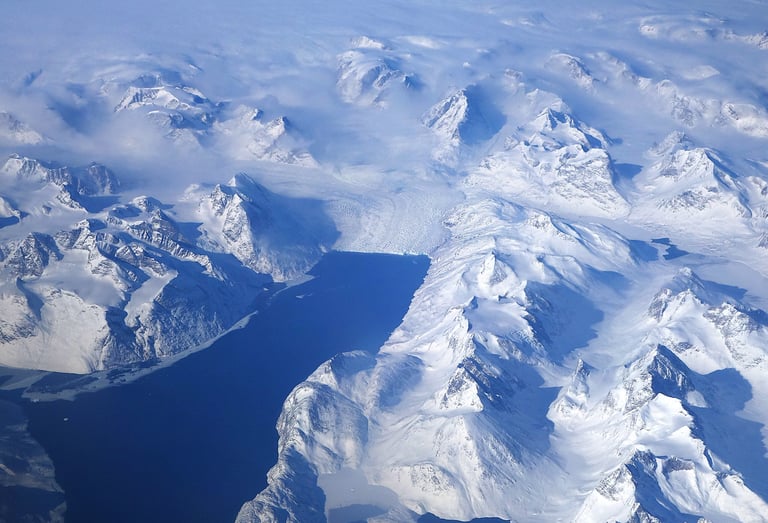
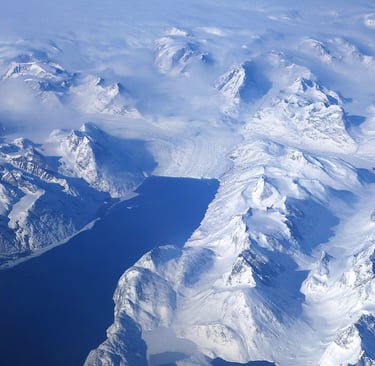
REGION 20 North Arctic
This region comprises the far northern territories of Canada, most of which are divided into islands partly covered by glaciers, such as Baffin, Victoria and Ellesmere, and Greenland, a vast island 80% covered by ice, under the jurisdiction of the Danish government.
Dominated by the tundra ecosystem, it has been home to the Inuit, Mongoloid peoples previously adapted to the extremely cold Siberian weather, who colonized these territories 4,500 years ago.
With a current population of 150,000 and 180,000, the Inuit have traditionally been seal hunters. Seals have formed the cornerstone of their diet, clothing and culture. In addition, they hunted whales, polar bears and caribou, fished, and in the summer gathered berries, birds’ eggs, etc.
Nowadays, the nomadic way of life, which has almost disappeared, is practized only seasonally in a few settlements, such as Pond Inlet (northern Baffin Island), Ivujivik (northern Quebec) or Qaanaaq (north-western Greenland)
This region comprises the far northern territories of Canada, most of which are divided into islands partly covered by glaciers, such as Baffin, Victoria and Ellesmere, and Greenland, a vast island 80% covered by ice, under the jurisdiction of the Danish government.
Dominated by the frozen desert or tundra ecosystem, it has been home to the Inuit, a group of Mongoloid peoples previously adapted to the extremely cold Siberian weather, who colonized these territories 4,500 years ago.
With a current population of 150,000 and 180,000, the Inuit have traditionally been hunters. Seals have formed the cornerstone of their diet, clothing and culture. In addition, they hunted whales, polar bears and caribou, fished, and in the summer gathered berries, birds’ eggs, etc.
Nowadays, the nomadic way of life, almost disappeared, is practised only seasonally in a few settlements, such as Pond Inlet (Baffin Island), Ivujivik (Quebec) or Qaanaap (N-W Greenland)
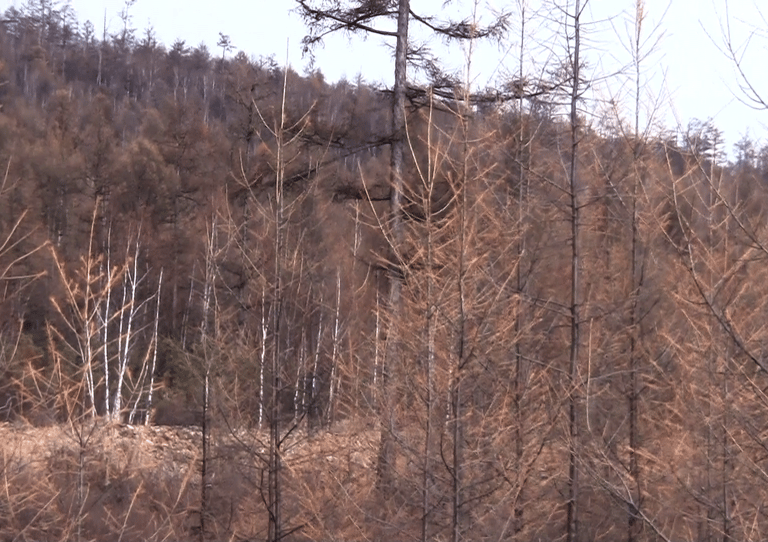
Boreal Forest REGION 19
REGION 18 Great Plains
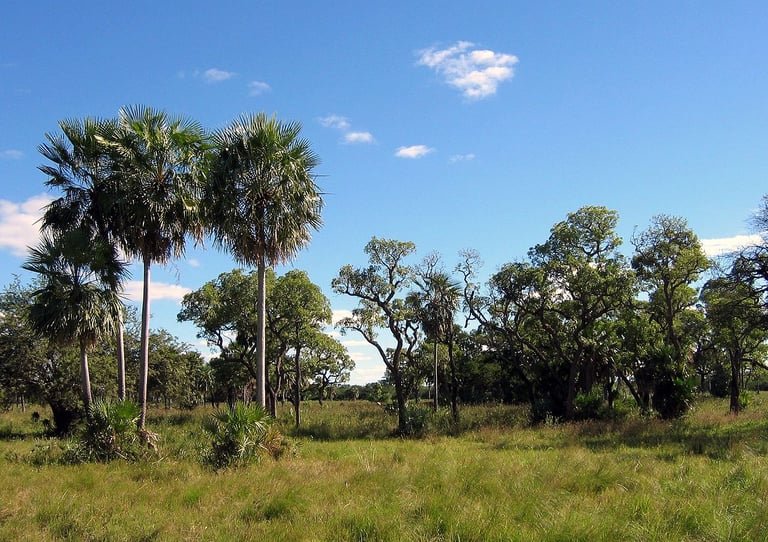
The Gran Chaco is the second-largest forested region in South America, after the Amazon, covering approximately 1 million hectares of dry forests and plains across Argentina, Paraguay, Bolivia and Brazil.
It is a biodiverse ecosystem, but one threatened by deforestation and agriculture, where groups of hunter-gatherer peoples have lived a nomadic lifestyle for 5,000 years, until they were forcibly settled from the late 19th century onwards.
Divided into linguistic families, it is worth mentioning the Guaycurú, which includes the Qom or Toba, the Pilagá, the Mocoví and the Kadiwéu; the Mataco-Mataguayo family, which comprises the Wichí or Mataco, the Chorote, the Maká and the Nivaclé; the Zamuco family, notably the Ayoreo, the only group that still maintains its traditional nomadic lifestyle of hunting and gathering. Finally, the Enlhet-Enenlhet family includes the Lengua, the Enxet and the Sanapaná.
Chaco REGION 15
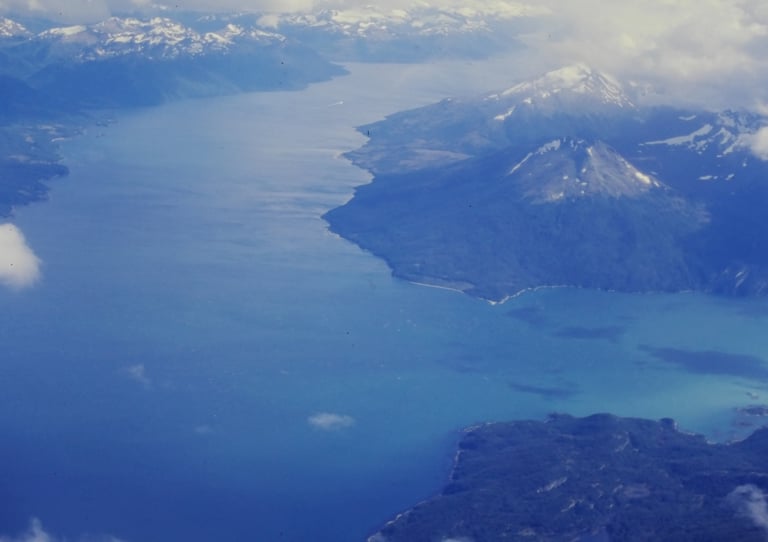
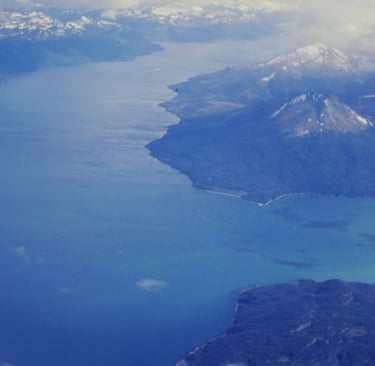
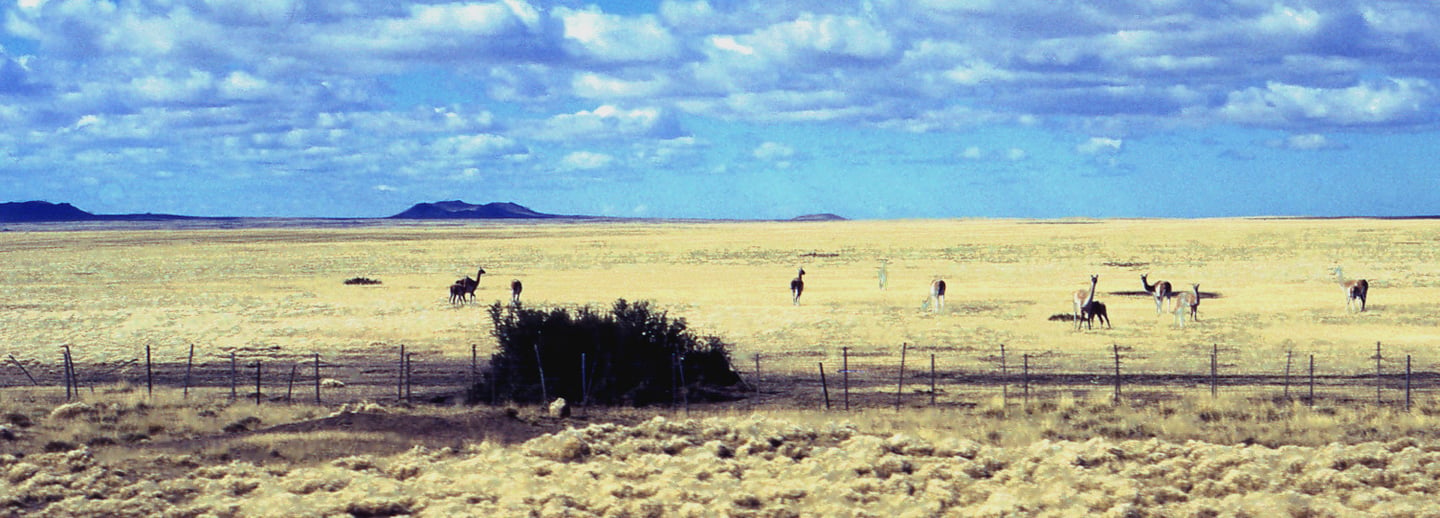
Patagonia is the southernmost region of the Americas, covering approximately 1,060,000 km² across Argentina – which accounts for 80% of the territory, consisting mainly of steppes – and Chile, which features more forests, mountains and glaciers.
This region is characterised by its low population density, having been inhabited for over 10,000 years by nomadic hunter-gatherers adapted to extreme conditions, who were later subjected to genocide, extermination and state violence, in the late 19th and early 20th centuries.
The main groups are the Tehuelches (Aónikenk) on the steppe, skilled hunters of guanacos and rheas, especially after they acquired the horses brought by the Spaniards; the Selk´nam in the forests, who remained as foot hunters in Tierra del Fuego; and canoe-faring peoples, such as the Chono, Kawésqar and Yaghans of the southern channels and Tierra del Fuego, who hunted sea lions and gathered, both mussels from the seabed and wild fruits in the forests. Of all these groups, a few settled communities remain, with the exception of the Chonos, who became extinct.
REGION 14 Patagonia
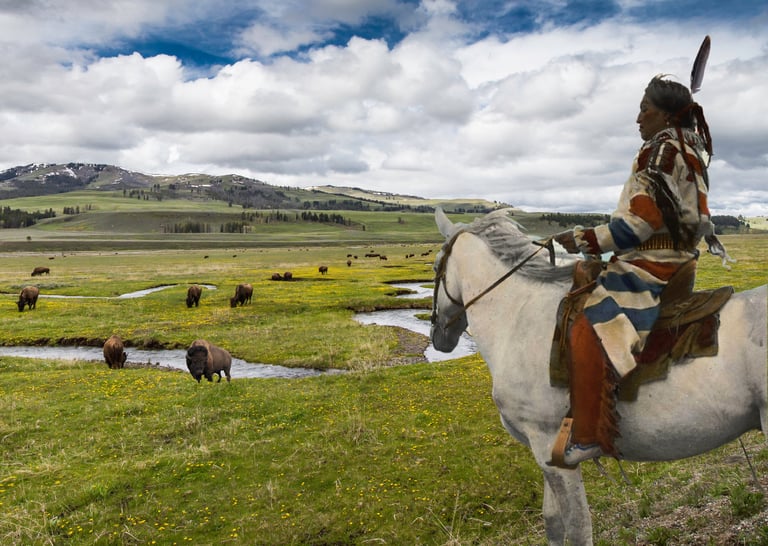
The Great Plains are a vast high plateau of semiarid grassland that lie across both the Central United States and Western Canada, covering an area of approximately 2,900,000 kms². Inhabited by pedestrian hunters of bison since at least 14,000 years ago, nomadism become more significant with the adoption of the horses introduced by the Spaniards in the 16th century.
They suffered massive losses due to the new diseases brought by European invaders since mid-XIX century, together with their genocidal practices and the deliberate slaughter of bison to seize the land and subjugate the natives.
Half a million Native Americans from the Great Plains survive today confined to reservations, such as Ridge Reservation (Oglala Sioux), Rosebud Reservation (Lakota Sioux), Standing Rock (Lakota Sioux, Yanktonai). Blackfoot Nation Reservation, Wind River Reservation (Shoshone, Arapaho), Fort Berthold Reservation (Mandan, Hidatsa).
REGION 1 Australia
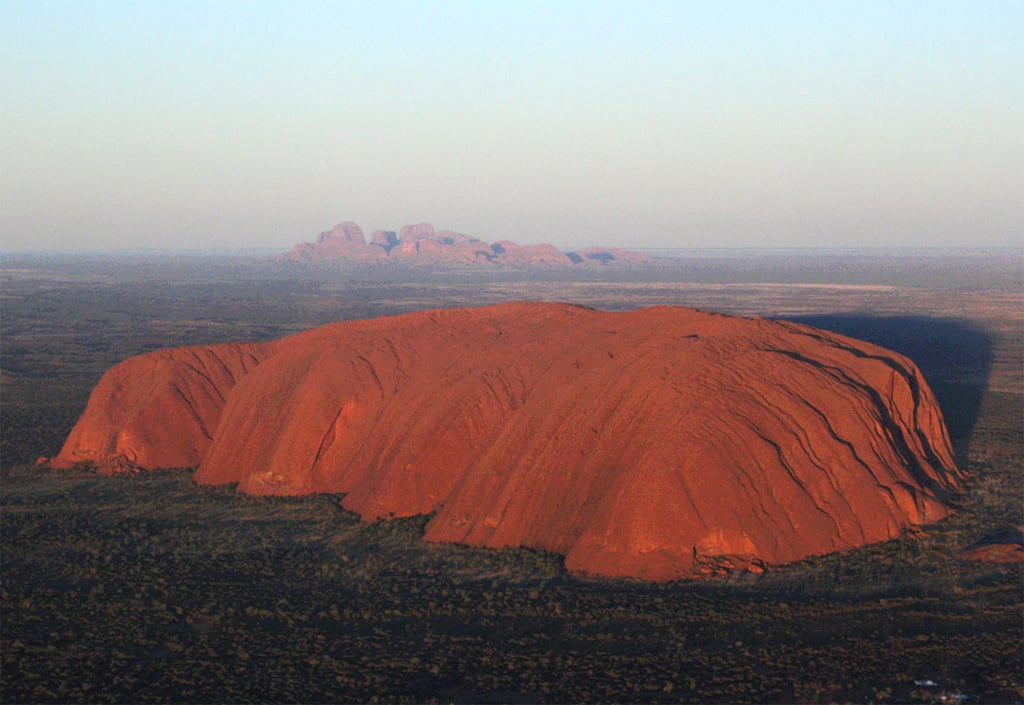
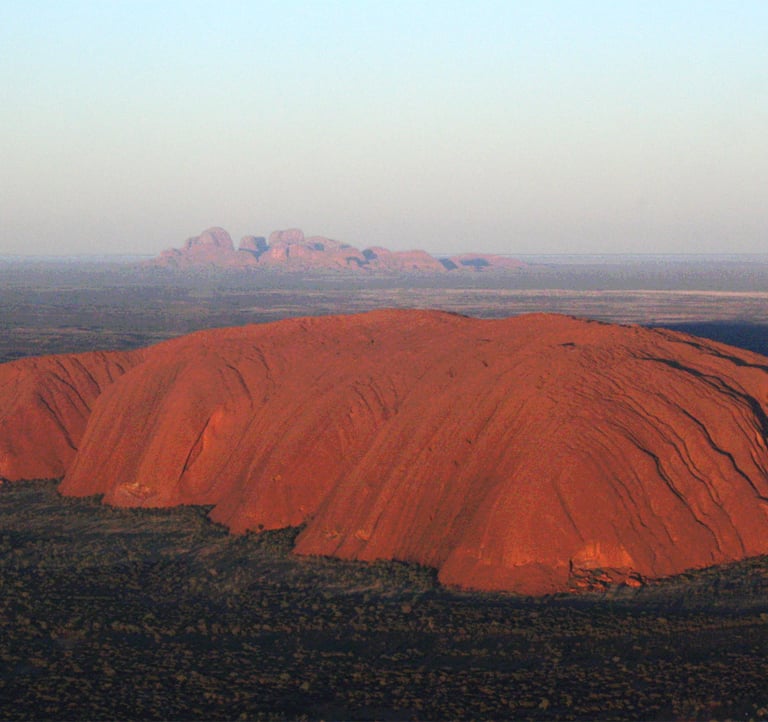
Australia is the world’s largest island and also the largest territory and state in Oceania. Around 70% of Australia’s land area is classified as arid or semi-arid, a region often referred to as the ‘Outback’, which includes dry savannahs, scrubland and areas of red earth.
When the British invaders arrived in 1788, Australia was home to more than 500 distinct Aboriginal nations or tribes, who led a nomadic or semi-nomadic lifestyle based on hunting, fishing and gathering, accounting a total population ranged from 300,000 to one million. They spoke more than 250 different languages, with many dialects, and had been managing the land for over 60,000 years, making the Aboriginal Australians the world’s oldest indigenous group.
Between the XVIII and XX centuries, British invaders carried out systematic campaigns of extermination, forced displacement and deliberate cultural assimilation against the indigenous population. Today, Aboriginal Australians account for just 3.8% of the Australian population and hold title to or manage 25% of the Australian continent, most of which is arid and unproductive.
Near East REGION 7
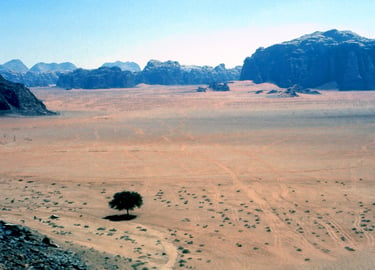
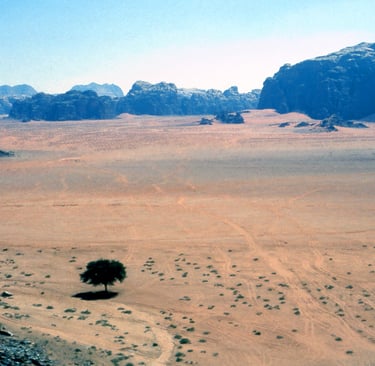
We use the term ‘the Near East’ to refer to the desert region comprising the Arabian Peninsula and Egypt, which historically gave rise to the earliest settled civilizations in history, as well as to the Islamic religion. The Arabian Peninsula is also the cradle of Bedouin culture, which spread from there to North Africa, the Levant and the Sinai.
From the Arabic term badawī (بدو), meaning ‘desert dweller’, the Bedu or Bedouins have formed tribes of nomads or semi-nomads who move in search of pasture and water, with a way of life closely linked to the camel, which they domesticated some 4,000 years ago, although they have also reared goats, mostly black-haired, from which they have made their characteristic tents.
Today, many Bedouins have settled down, particularly in oil-producing countries, and also as a result of armed conflicts. Only a few tribes still maintain a degree of mobility in the Sinai, Jordan, Iraq and Saudi Arabia. Furthermore, communities of Nawar Roma live in some of these countries.
Small actions create meaningful lasting change